
FOUR WISE WAYS TO WINTERIZE YOUR HOME!
Refer to this helpful list of 4 ways to save money, while preserving (and, potentially, increasing) your home’s value. Take action now to ensure you’ll be comfy and cozy all winter long.
Unlike other states in our amazingly diverse nation, we in California are fortunate enough to experience relatively mild winter weather. That said, it’s still important to take a few actions to winterize one of your most valuable and enduring assets – your home.
- Safeguard your furnace and reduce energy costs: replace/clean your furnace filter
Although often overlooked or entirely forgotten, it’s important to replace or clean your furnace filter each month throughout the winter months to keep it functioning at its best. To make it easy on yourself to remember, I suggest you make a point of taking out your filter on the same day each month throughout the winter. For example, I check our furnace filter on the 1st Saturday of the month after the first cold spell and continue to do so each month until early Spring.
Given that the vast majority of people own smart phones, it’s easy enough to set a reminder on your calendar to clean or replace your furnace filter from November through to March or April of the next year. Why is this so important? Put simply, dirty filters restrict airflow. And worse yet, they actually increase energy demands.
The primary role of the air filter is to protect the blower fan and other system components from airborne particles pulled in through the return duct. As your furnace filters the incoming air, it’s also improving the quality of the air it returns to your home. This helps to prevent any potential contaminants from being recirculated.
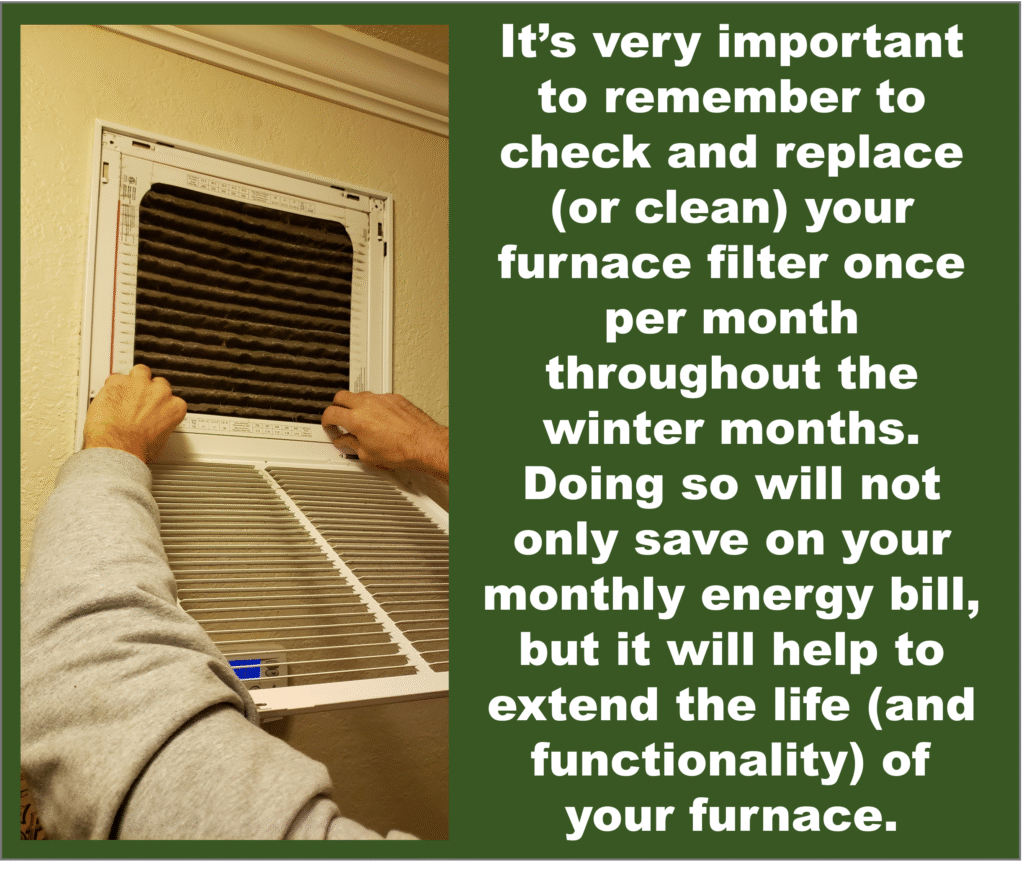
Many mistakenly believe that an air filter’s role is to clean the air you breathe within your home. Although there’s some truth to this, an air filter’s primary purpose is to protect the furnace.
Furnace air filters happen to employ a special rating system called MERV (Minimum Efficiency Reporting Value) which rates the overall effectiveness of a filter on a scale of 1 to 20. The higher the rating, the more efficient the filter is at trapping dust particles and other airborne contaminants.
Typically, a MERV rating between 8 to 11 is adequate for most Bay Area and Northern California homes, including those in rural areas where dust and dirt can be more prevalent. A filter with a rating of 8 is designed to filter out pet dander, pollen, hair, lint, dust, and dust mites. The advanced filters, beginning at 11, remove everything an 8 filter does, along with mold, smog, and smoke. Premium allergen control starts at a 13 MERV rating, which can remove viruses, allergens, and bacteria.
To be safe, please be sure to check your furnace manufacturer’s specific recommendations for the maximum MERV rating. It’s important to note that the higher a filter is rated, the less air it allows to flow through. This is what causes your furnace to work harder. Consequently, keeping your furnace filter clean is a MUST!
You might also want to consider switching to a permanent, rather than a disposable filter. This will reduce waste as well as save you from needing to keep spare filters on hand.
I believe it’s important to note that disposable fiberglass filters only trap 10%, up to 40%, of debris. For those of us that have furry pets, disposable filters tend not to be up to the task at hand. We’ve had very affectionate and extremely lovable cats who tended to shed a good deal year-round. Those of you who are dog owners may also have experienced some challenges with dog hair and frequent shedding, which tends to worsen with a change in weather.

Electrostatic filters are a valuable option because they capture 95% of airborne particles including pet dander, smoke, pollen, and mold spores. The majority of electrostatic filters are permanent. This means that they should last a lifetime, although there are disposable (single use) filters available for purchase. Note that prices vary widely.
If you suffer with asthma or other respiratory ailments, it may be worth considering a genuine (not “HEPA-like”) HEPA filter which can remove at least 99.97% of airborne particles. HEPA filters are based on Department of Energy standards.
Given that a furnace needs to have adequate airflow to work efficiently and to adequately heat your home, replacing or cleaning your furnace filter each month in the winter is a MUST. Keep in mind that the cost of furnace replacement runs $6,000 to $10,000, or more!
- Reduce energy costs and prevent scalding: turn down your water heater
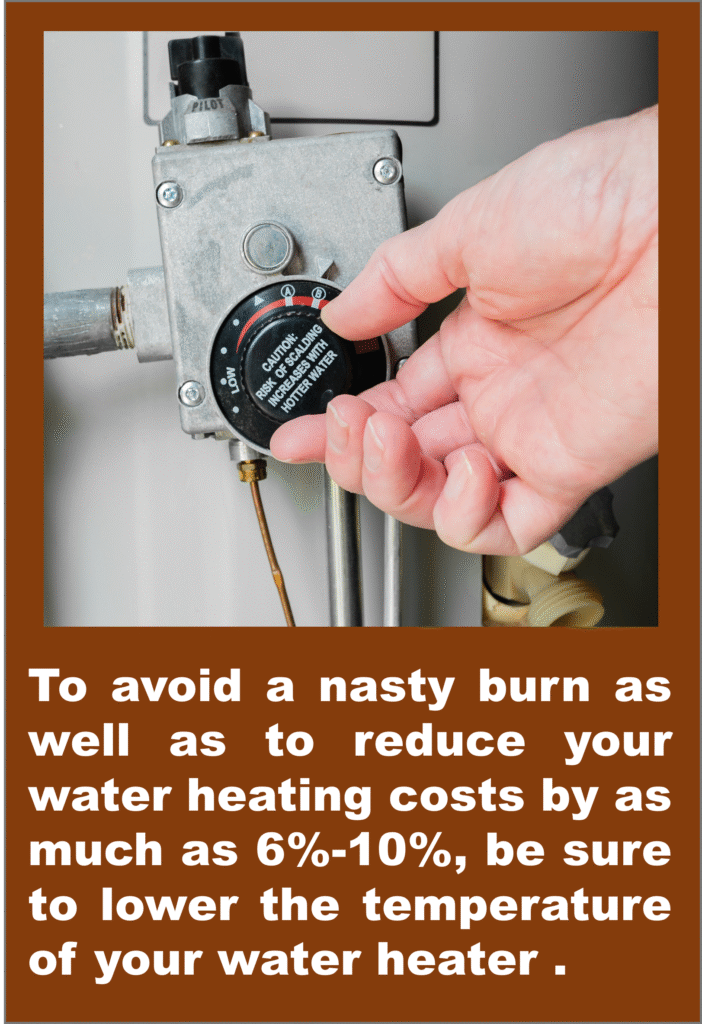
While conventional water heaters are typically set to 140 degrees Fahrenheit (this is the default setting from most manufacturers), you end up paying for this in terms of higher costs as well as the occasional scalding burn. The Department of Energy recommends having your tank-based hot water heater set to 120 degrees. By lowering the temperature, you can not only avoid a nasty burn, but you can reduce your water heating costs by 6% – 10%.
Many of my customers have opted for tankless water heaters which are also called “on demand” units or “instant hot.” There are some definite advantages to on-demand water heating. For one thing, a tankless water heater is far more compact in size. Consequently, it takes up less space than a conventional or tank-type water heater. Tankless water heaters can virtually eliminate what is referred to as “standby losses.” This is energy wasted when hot water cools down in long pipe runs or while it’s just sitting in the storage tank.
In most of California, tankless units typically operate on natural gas (although they can also operate on propane). The main advantage is the elimination of the extra costs associated with keeping 40 to 50 gallons of water hot in a storage tank. The result is that you waste less energy.
What my customers like most about the tankless units is that they offer a continuous supply of hot water, which is ideal for filling a big whirlpool tub. Being more compact than the standard water heater, they can be mounted on a wall, rather than sitting on a platform.
If you’d like more information or an estimate on installation of a tankless water heater, please feel free to give me a call at 707-999-5878, or send a text to 408-368-7162.
- Prevent water damage to your home: clean your gutters
It’s that time of the year when leaves fall. To protect your home’s exterior and foundation walls, it’s important to clean out your gutters and downspouts. This is important because once your gutters become clogged, any rain water that falls can all too easily back up, causing water to seep into your home. Once inside, water can cause a costly and troublesome flood, expensive and unsightly water damage, and has the potential for growing health-damaging mold.
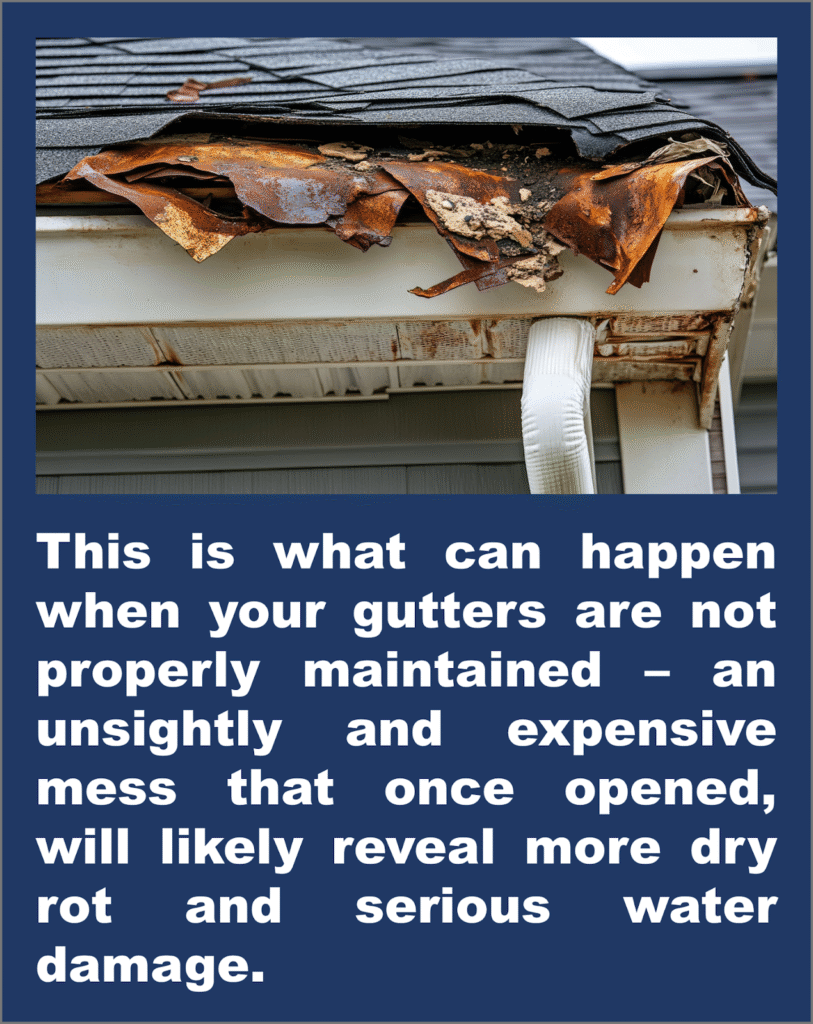
Homes with lots of nearby deciduous trees (i.e. trees that drop their leaves) face a much higher incidence of clogged gutters. It’s not uncommon for clogged gutters to get so heavy that they pull the gutters loose, rotting both the trim and siding. Even should your gutters not overflow, you invite carpenter ants, mosquitoes, and other pests by allowing decaying debris to simply sit.
In case you’re not familiar with carpenter ants, please be advised – you do NOT want them in your home! Unlike termites, who ravenously eat wood, carpenter ants hollow out the wood in your home to nest, causing their own variety of costly and unsightly damage.
Although there are plenty of gutter cleaning tools and technologies available today, most methods eventually involve getting on a ladder. If getting on a ladder is not something you’re comfortable doing, I encourage you to look into a professional gutter cleaning service.
If you are a do-it-yourselfer, then make certain that you wear gloves, a dust mask, and safety goggles. It’s especially important to make sure that your ladder is well-footed at all times! I suggest using a ladder stabilizer, or stand-off. These will help keep you from denting and damaging your gutters.
Scoop all the accumulated debris into a sturdy garbage bag with a garden trowel. Once you’ve done so, rinse the remaining detritus toward the downspout with a high-pressure nozzle on your hose, making every effort to scrub it clean. Do your utmost to avoid spattering the siding in the process.
After this is accomplished, be sure to clear the downspouts with a hose or auger. To cut down on large clogs, I recommend installing leaf strainers at the drain tops. Again, if this isn’t your cup of tea, you can always call a pro!
If you happen to spot staining on the siding of your home, this can be a sign of standing water in your gutter system. Stagnant rain water can cause damage to the fascia boards behind the gutters and on the shingles of your roof. If you suspect such damage, text me immediately (408-368-7162) so I can get out to your home to assess the problem and prevent any further damage.
Remember that clogged gutters can do serious damage to your roof and fascia, culminating in roof problems and wood rot. Should water pooling occur near the foundation, this can cause a damaged or cracked foundation. Include the possibility of damaged or swollen siding, rotted decks or porches (should water fall on these structures), cracked and water-damaged driveways, as well as stains on concrete and siding. This all becomes very unsightly – and increasingly costly – to remedy!
Water is a serious threat to your foundation. Things such as soil erosion or a cracked foundation can cause your home to shift. When you start dealing with foundation problems, it can get notoriously expensive to fix! Just remember that it’s much, much easier – and far more affordable – to clean and/or fix your gutters.
- Cut heating/cooling costs, improve durability, increase comfort, and create a healthier indoor environment: seal air leaks
Before you begin to think about replacing windows and doors, installing a new HVAC unit, or insulating the attic and walls, make certain that you first tackle the air leaks in your home. This low-cost/high-impact fix will make a surprising difference in your physical (and financial) comfort level.
While many homeowners tend to overlook this important fact, air leakage contributes not just to annoying drafts and higher heating costs, but also to moisture problems. Moisture problems in your home can affect your health and wellness, as well as its value and durability.
According to the U.S. Department of Energy, air leaks in your home can account for 5%-30% of your energy bill. Air leaks are commonly found around recessed lighting, door and window frames, chimney flashing, and furnace flues.
Sealing air leaks is among the least expensive and yet most cost-effective measures you can take to improve your home’s comfort and energy efficiency. Few homeowners realize that air leaks are equivalent to leaving a window open! By safely sealing your air leaks, you can expect to see savings of 10% to 20% on your heating and cooling bills. If your home is older, or especially leaky, that savings could be even higher!
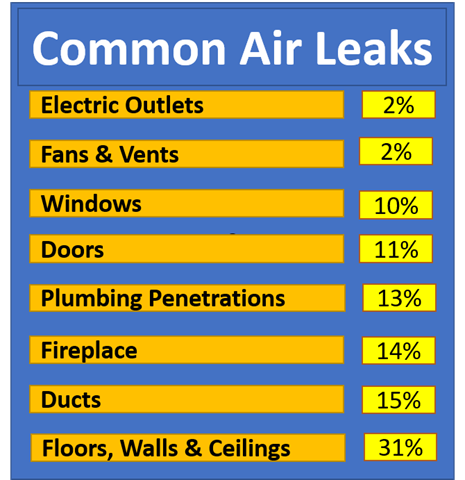
Now, before you run out to buy a caulk gun and weatherstripping, there are some very important things for you to consider. It’s recommended you reduce air leakage as much as possible, yet provide controlled ventilation as needed to ensure proper indoor air quality.
Most older homes lack proper ventilation. Therefore, they depend on cracks and leaks to let in needed air. This is particularly true when fuel-burning appliances are operating inside the home. Fuel-burning appliances include furnaces, water heaters, clothes dryers, gas stoves, gas space heaters, and fireplaces, to name a few.
Without adequate ventilation, carbon monoxide and air pollutants from cleaning chemicals, combustion appliances, and off-gassing household products can build up. This can create an unhealthy – even dangerous – environment in your home!
While opening a window affords ventilation, clearly there are times when doing so would not be practical – such as when it’s too cold (or too hot) outside. Gratefully, an actively licensed contractor can help you get all the energy savings and comfort possible from a well-sealed home, while ensuring your safety (and that of your loved ones) through proper ventilation.
Keep this important fact in mind: your house is a system designed in such a way that every component in it works together. Simply by adding insulation and sealing air leaks, you can dramatically improve the energy efficiency of your home while also improving its comfort and durability.
That said, it’s vital to recognize that every change you make to your home’s envelope – its walls, floors, and ceiling – and to the components in your home, will affect how it works to keep out the elements while keeping your family safe and comfortable. Although some do-it-yourselfers can cost-effectively eliminate air leaks, if you accidently “tighten” your home’s envelope without providing appropriate ventilation, you can cause pressure imbalances or negative pressure in the house.
Negative pressure can become a serious problem because it can set up the conditions for backdrafting of fireplaces or fuel-burning (combustion) appliances. Additionally, pollutants can be drawn into your home, thereby harming you and your loved ones.
A properly trained and licensed contractor understands how systems work together to keep your house operating as it should. If you have any questions about the winterizing needs of your home, that’s what I’m here for – to address them and to help you better understand what your home may need to ensure its overall comfort, safety, durability, and value.
If you have enjoyed this blog, then please let me know by dropping me an email or commenting in my blog. Please feel free to share this blog with your family, friends and neighbors, or anyone else who might benefit from the information shared herein.
Remember, if someone you know is looking for a licensed general contractor, I’m the man to call!
May you and your loved ones have the very Coziest, Healthiest, and Happiest of Holidays!

Ed Neir, General Contractor
License #: 928715